Jean Cocteau (1889.1963)
Autograph manuscript signed – Dinner of Heads.
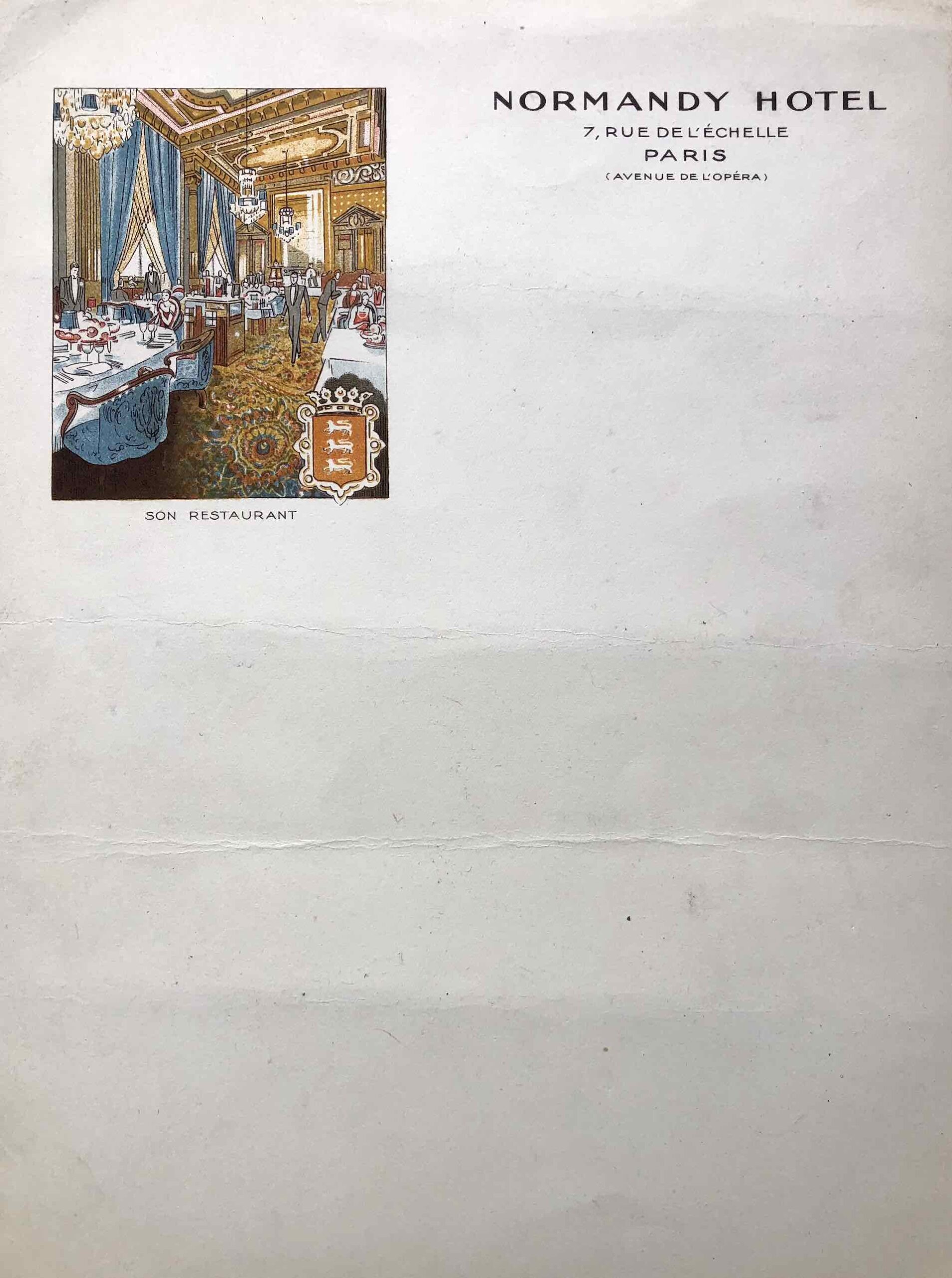
Normandy Hotel letterhead , Paris.
First page slightly trimmed at the top, without affecting the text.
No place or date [Paris, November 14-15, 1937].
Announcement of the Dinner of Heads broadcast by Radio Luxembourg, published in the daily newspaper Ce Soir under the title: Infernal Machines.
« My masterpiece, I confess, will be the Louis Armstrong trumpet that I imitate using a Gilett blade, a sheet of Job paper, an elastic band, and a lampshade »
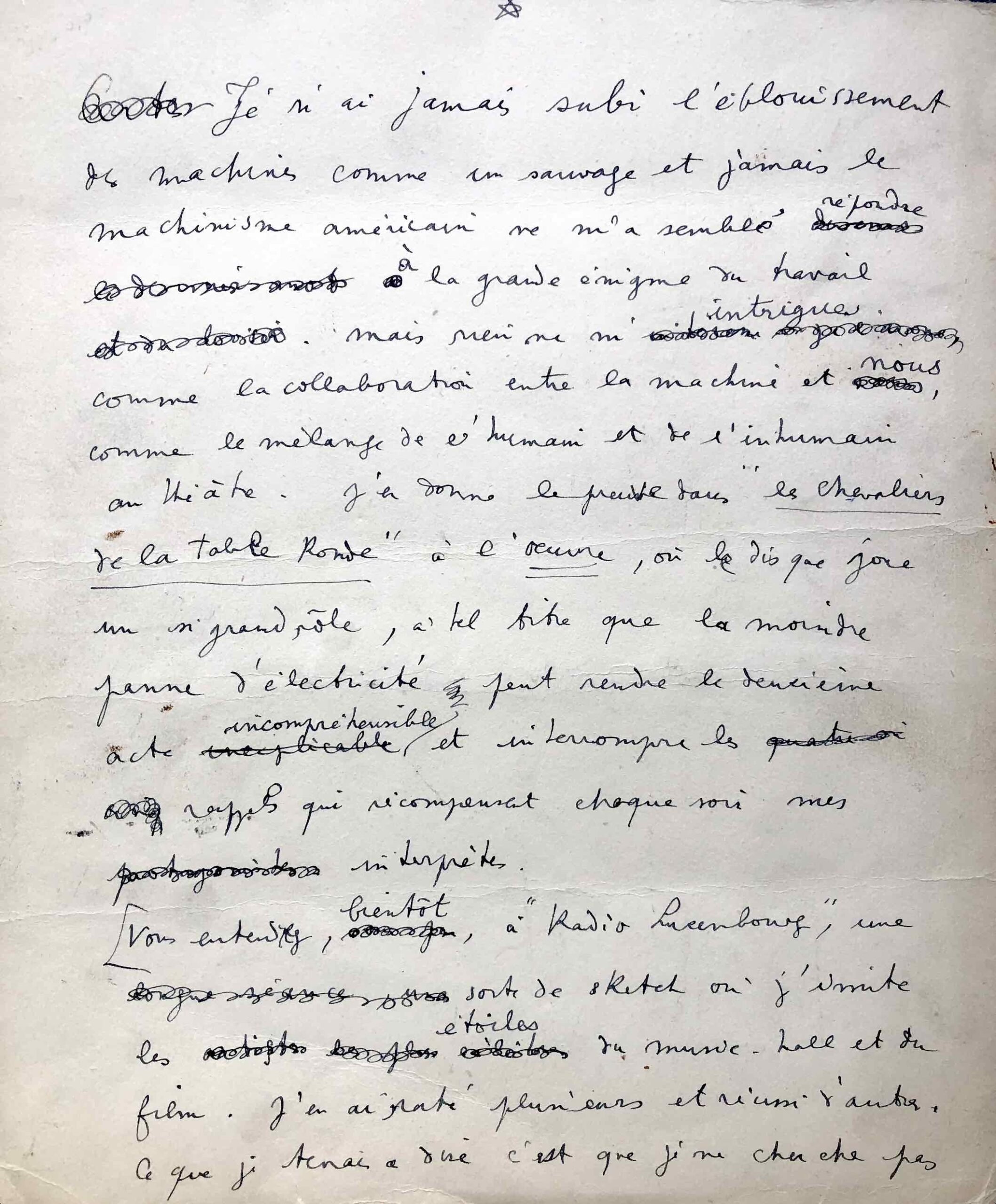
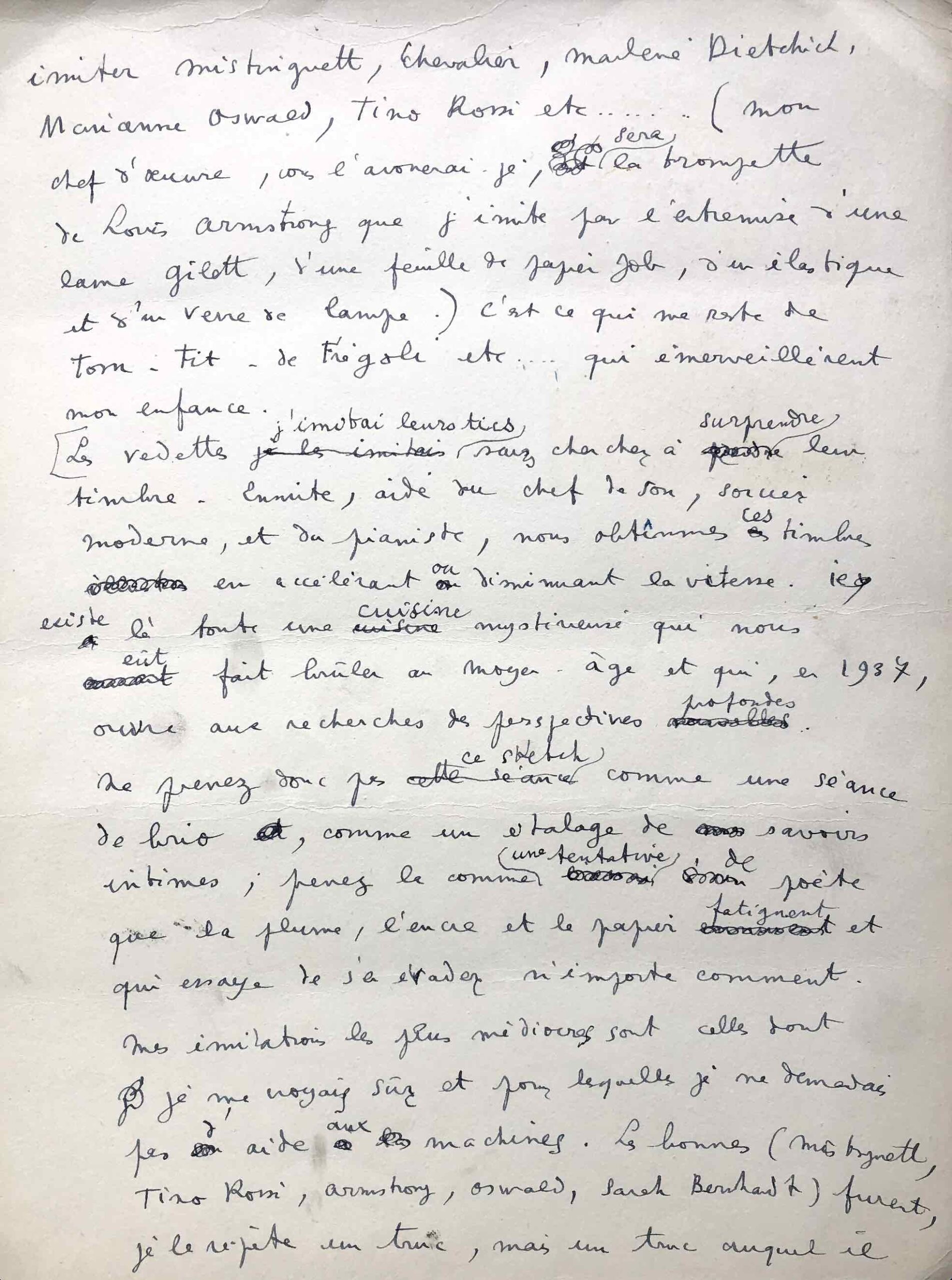
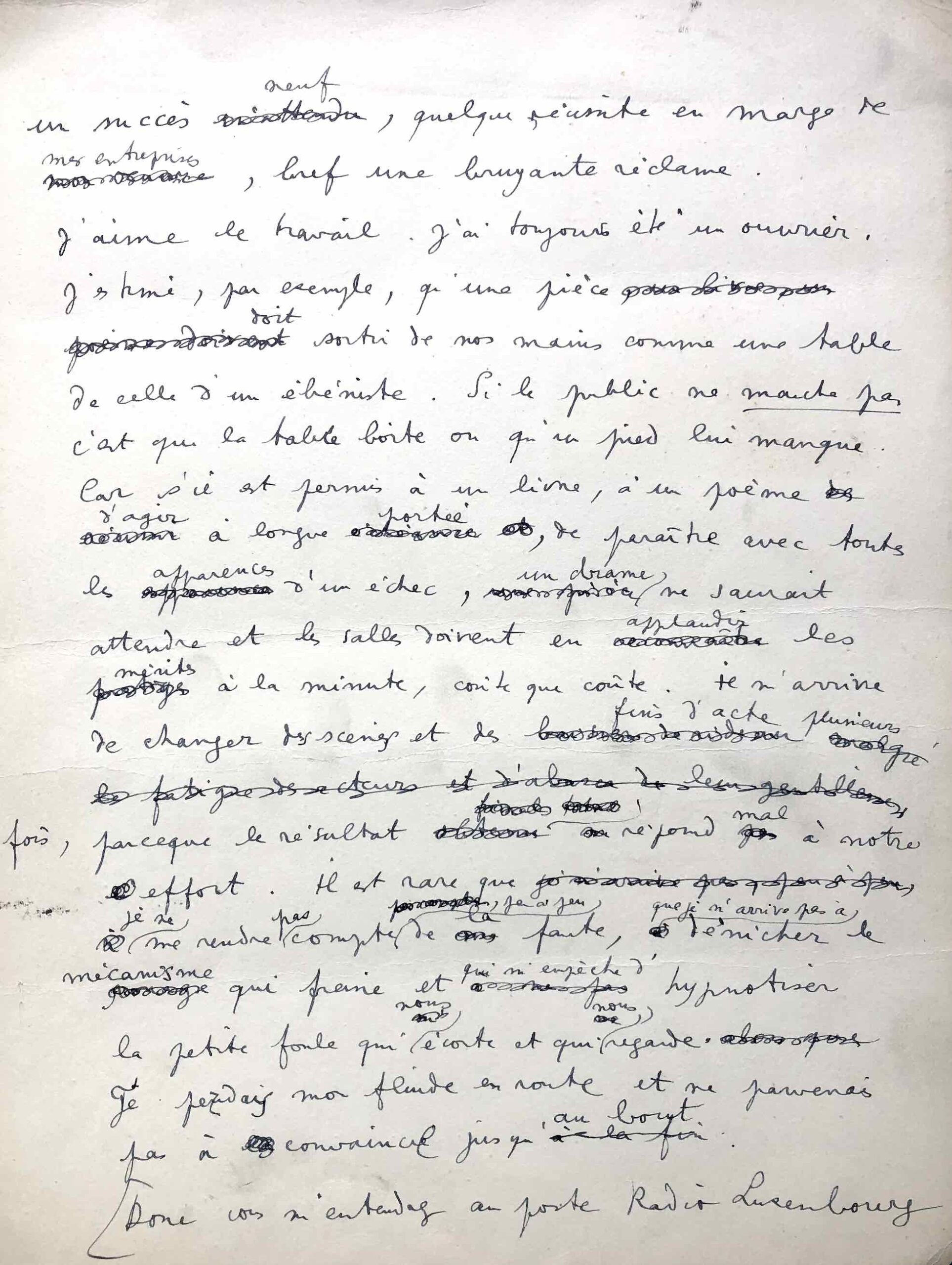
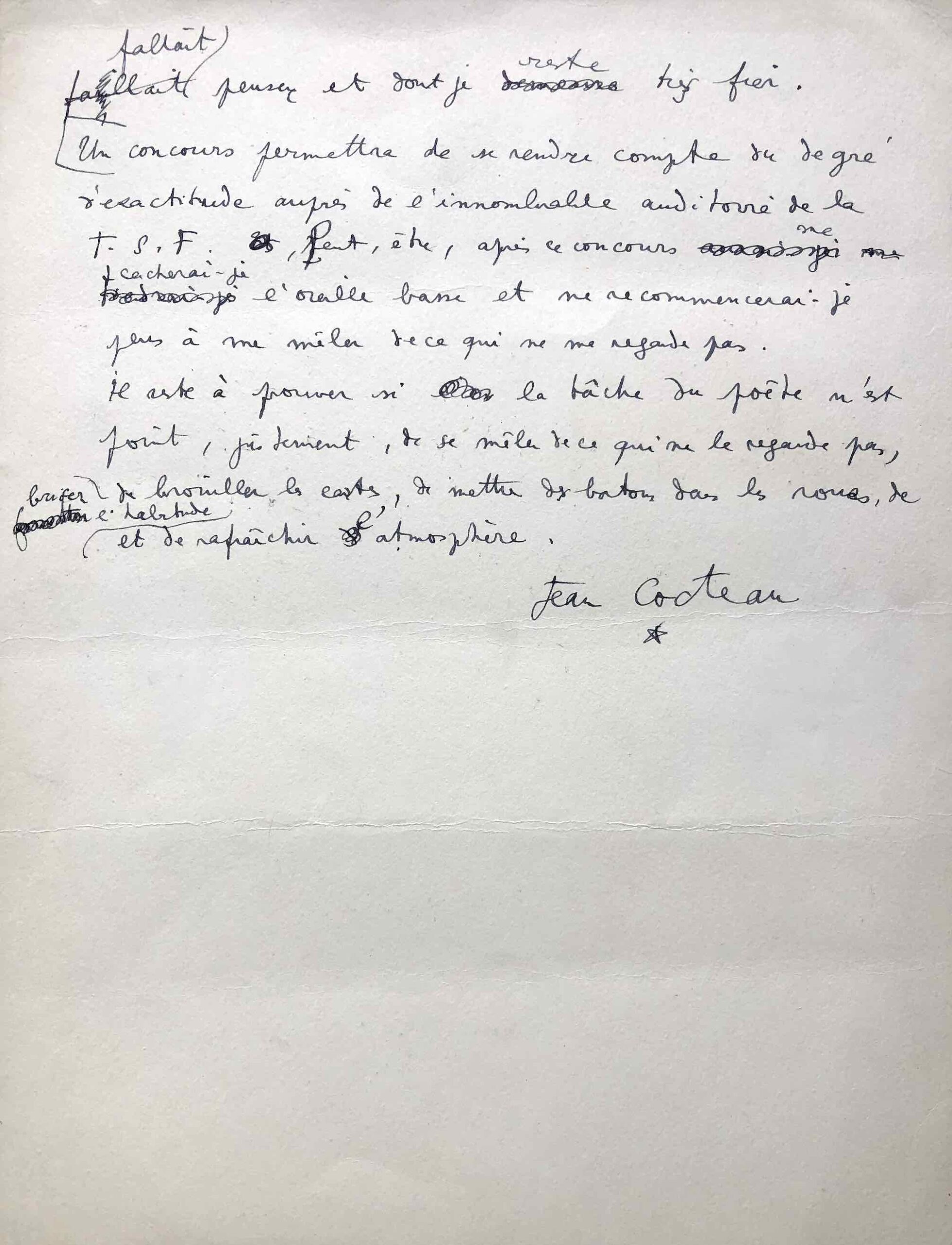
Announcement for "Le Dîner de têtes", the radio program of imitations by Jean Cocteau of music hall and cinema personalities, broadcast in November 1937 on Radio Luxembourg: first draft autograph manuscript, with numerous corrections.
___________________________________
« I have never been dazzled by machines like a savage, and American mechanization has never seemed to me to answer the great enigma of work. But nothing intrigues me like the collaboration between machine and us, like the blending of the human and the inhuman in the theater. I provide proof of this in "The Knights of the Round Table" at the Théâtre de l'Œuvre, where the recording plays such a crucial role that the slightest power outage can render the second act incomprehensible and interrupt the curtain calls that reward my performers each night.
You'll soon hear a sort of sketch on Radio Luxembourg where I imitate music hall and film stars. I've messed up several and nailed others. What I wanted to say is that I'm not looking for some new kind of success, some side project, or, in short, just blatant self-promotion.
I love work. I've always been a craftsman. I believe, for example, that a play should emerge from our hands like a table from cabinetmaker 's. If the audience isn't engaged, it's because the table is wobbly or missing a leg. For while a book or a poem may have a long-term impact, appear to be a failure, a drama cannot wait, and the audience must applaud its merits immediately, whatever the cost. I sometimes change scenes and act endings several times because the result doesn't live up to our efforts. It's rare that I don't gradually realize the mistake, that I can't find the mechanism that's holding me back and preventing me from captivating the small crowd listening and watching us. I was losing my momentum along the way and couldn't convince them to the end.
So you will hear me on Radio Luxembourg imitating Mistinguett, Chevalier, Marlene Dietrich, Marianne Oswald, Tino Rossi, etc. (My masterpiece, I confess, will be the trumpet of Louis Armstrong which I imitate by means of a Gilett blade, a sheet of Job paper, an elastic band and a lamp glass.) This is what remains of Tom-Tit, Fregoli etc., who amazed my childhood.
I imitated the stars' mannerisms without trying to capture their unique timbre. Then, with the help of the sound engineer, a modern-day wizard, and the pianist, we achieved those timbres by speeding up or slowing down the tempo. There's a whole mysterious technique at work here that would have burned us at the stake in the Middle Ages, but which, in 1937, opens up profound new avenues for research.
So don't take this sketch as a display of brilliance, a show of intimate knowledge; take it as the attempt of a poet weary of pen, ink, and paper, trying to escape in any way he can. My worst imitations are those I was confident in and for which I didn't ask for help from the machines. The good ones (Mistinguett, Tino Rossi, Armstrong, Oswald, Sarah Bernhardt) were, I repeat, a trick, but a trick that required thought and of which I remain very proud.
A competition will allow us to gauge the degree of accuracy among the countless radio listeners. Perhaps, after this competition, I will keep my head down and never again meddle in what doesn't concern me. It remains to be seen whether the poet's task is not precisely to meddle in what doesn't concern him, to muddy the waters, to throw a wrench in the works, to break with routine, and to refresh the atmosphere. Jean Cocteau. »
___________________________________
A true Renaissance man, Cocteau was interested in radio, for which he created several programs; the most famous was "Le Dîner de têtes" (The Dinner of Heads), a sketch featuring imitations of ten famous voices: Mistinguett, Maurice Chevalier, Marlene Dietrich, Marianne Oswald, Tino Rossi, Sarah Bernhardt, and Louis Armstrong, as he announces here, but also Max Jacob, Greta Garbo, and Marcel Proust. The sketch was broadcast on Radio Luxembourg on November 29, 1937, from 9:30 p.m. to 10:05 p.m.
The imitation of which the writer is most proud is that of Louis Armstrong's trumpet, " achieved using a Gillette blade, a sheet of Job paper, an elastic band, and a lampshade ": it recalls the role played by Cocteau in introducing jazz to France. (See Jacques T. Quentin, " Jazz et modernités artistiques au prisme de l'œuvre de Jean Cocteau" in "Jazz & Lettres," Geneva, Bibliothèque Bodmer, 2017, pp. 77-88.)
Jean Masson, editor-in-chief of Radio Luxembourg at the time, recalled that one of the "tricks" mentioned by Cocteau was to mix recordings of real voices with imitations – notably for Sarah Bernhardt.
The announcement of the upcoming broadcast of his show and of a competition was intended for the communist newspaper Ce Soir, to which Jean Cocteau contributed for several years: it appeared under the title "Infernal Machines" on page 2 of the daily newspaper, on November 16, 1937.
The manuscript contains numerous deletions and corrections which we have not reproduced here in order to facilitate reading.